Straight answers to the questions travellers actually ask about camping luxury in Bali. Everything here is information, not licensed advice; for bookings we introduce you to vetted local partners. Have a question that is not covered? Ask us directly.
What is glamping in Bali?
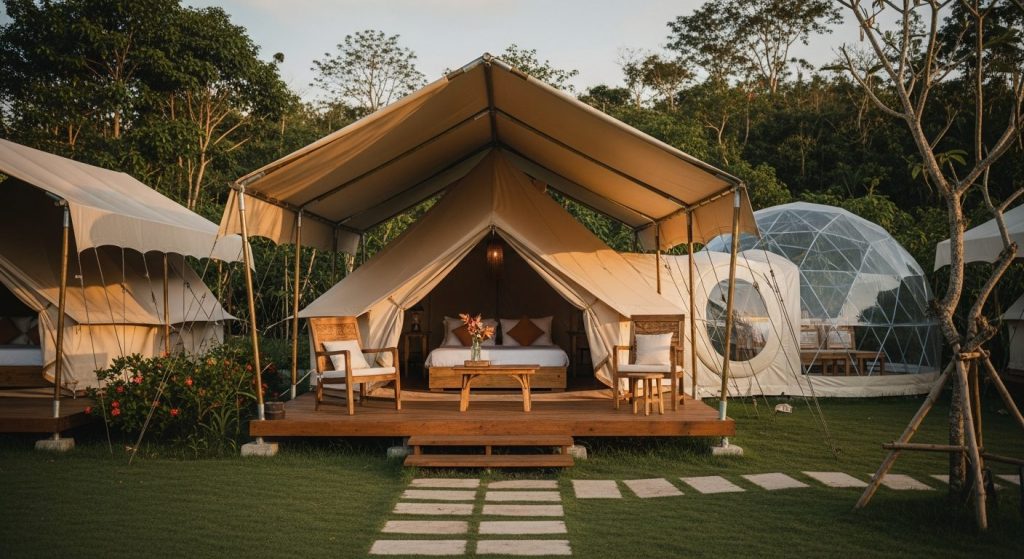
Glamping in Bali is luxury camping that blends a hotel-grade stay with the outdoors. You sleep in furnished safari tents, bell tents, geodesic eco-domes or transparent bubble tents with real beds, ensuite bathrooms, and often air-conditioning, set in jungle, clifftop, lakeside or beachfront locations. It trades a few creature comforts for closer contact with nature.
How much does luxury glamping in Bali cost per night?
Luxury glamping in Bali typically costs about US$50 to US$250+ per night. Simple budget tents start around US$20 to US$25, mid-range luxury tents average roughly US$60 to US$120, and high-end honeymoon domes, bubble tents or private-pool safari tents in Ubud, clifftop and beachfront areas commonly run US$150 to US$300+ per night. Rates vary by season. Read more.
Is glamping in Bali worth it?
For most travellers, yes. Bali glamping pairs unique design and a nature setting with hotel-style comforts such as real beds, ensuite bathrooms, pools and breakfast, often at a fair price. It suits honeymooners, couples and families wanting something more memorable than a standard hotel, provided you choose a property matched to your comfort expectations. Read more.
What types of glamping tents are available in Bali?
Bali offers safari tents (large canvas tents, often with four-poster beds and private pools), bell tents (cozy cone-shaped tents), geodesic eco-domes (modern domes with big windows), and transparent bubble tents for stargazing. Many sites also sell wooden cabins, treehouses and traditional lumbung barns as glamping. Several properties mix multiple unit types. Read more.
What is the difference between glamping and camping?
Camping means basic gear: you pitch your own tent, sleep in a sleeping bag and cook over a fire. Glamping (glamorous camping) provides furnished tents, domes or cabins with real beds, linens, electricity, running water and often AC, ensuite bathrooms and breakfast. Glamping keeps the nature setting while removing the discomfort and setup work. Read more.
What is the difference between glamping and a hotel in Bali?
A hotel offers enclosed rooms in a building; glamping places you in a tent, dome or cabin immersed in jungle, clifftop or beachfront nature while keeping hotel-style comforts like ensuite bathrooms, pools and breakfast. Glamping trades some predictability for views, privacy and a stronger sense of place. Both can be luxurious. Read more.
What are the best areas for glamping in Bali?
Top glamping areas are Ubud (jungle and rice fields, ideal for couples and wellness), Kintamani around Mount Batur and Lake Batur (cool air, volcano and lake views), Tabanan and the west and north coasts (beachfront sunsets), the Bukit and clifftop south (ocean panoramas), and Nusa Penida (island adventure). Each area suits a different vibe. Read more.
Where is the best glamping near Ubud?
Glamping near Ubud sits among rice fields and jungle, typically 5 to 20 minutes from Ubud centre. Properties such as Sandat Glamping offer roughly 40 square metre safari tents with private pools and four-poster beds, while others provide adults-only kanvas with jacuzzis. Ubud suits honeymooners, couples, wellness and yoga travellers seeking calm and culture nearby. Read more.
Is glamping in Bali good for honeymoons?
Yes, Bali glamping is very popular for honeymoons and romantic trips. Many sites are designed for couples with private plunge or infinity pools, four-poster beds, open-air bathrooms, jungle, rice-field or sea views, and extras such as in-tent breakfasts, floating breakfasts and candlelit dinners. Bubble tents and clifftop domes are especially romantic for proposals. Read more.
Is glamping in Bali suitable for families with kids?
Often yes, but check each property. Family-friendly glamping sites offer larger tents or family units with extra beds, pools, open play space, on-site restaurants and easy vehicle access. However, some properties, including certain Nusa Penida sites, are adults-only. Always confirm age restrictions, bed configuration and whether cribs or extra beds are available before booking. Read more.
What is a bubble tent and where can I do stargazing glamping in Bali?
A bubble tent is a transparent or semi-transparent dome that lets you see the sky from bed, ideal for stargazing. In Bali they are found in jungle and highland settings, including Kintamani near Mount Batur for lake and volcano skies, and Ubud and Uluwatu bubble hotels. Choose clear-roof units away from light pollution for the best stars. Read more.
Do Bali glamping tents have air conditioning and WiFi?
Most mid-range and luxury glamping tents in Bali include air conditioning and free WiFi as standard, along with private ensuite bathrooms with hot water. Budget tents may have only a fan and shared facilities. Because Bali is hot and humid, confirm AC versus fan and WiFi availability with the specific property before you book. Read more.
Can you find Bali glamping with a private pool?
Yes. Many luxury glamping tents and domes in Bali include a private plunge or infinity pool, particularly safari-style tents around Ubud and clifftop sites with ocean views. Private-pool units cost more and are popular for honeymoons. Some properties share a central pool instead, so verify whether the pool is private or shared before booking. Read more.
What is usually included in the price of Bali glamping?
Typical inclusions are a furnished tent, dome or cabin with bed, linens and towels; a private or shared bathroom; daily breakfast at many sites; WiFi; and AC or a fan. Common facilities often include a pool, lounge, fire pit and on-site restaurant. Transfers, tours, spa treatments and romantic dinners are usually paid extras. Read more.
What is the cheapest glamping in Bali?
Budget glamping in Bali starts around US$20 to US$25 per night, with simple tents from roughly IDR 300,000 to 400,000 that often include breakfast. Areas like Kintamani offer wooden teepee and A-frame tents with mountain and lake views at low prices. Cheaper sites typically have fans rather than AC and may use shared bathrooms. Read more.
What is the difference between budget and luxury glamping in Bali?
Price depends on location, amenities, tent size and season. Budget glamping offers basic furnished tents, often with fans and shared or simple bathrooms, from about US$20 to US$50. Luxury glamping adds AC, ensuite hot-water bathrooms, private pools, designer domes or safari tents, breakfast and on-site restaurants, commonly US$120 to US$300+ per night. Read more.
When is the best time of year for glamping in Bali?
The dry season, roughly April to October, is the best time for glamping in Bali, with sunny days, lower humidity, fewer mosquitoes and clearer mountain views. The rainy season, around November to March, is greener, quieter and cheaper but brings heavier showers, especially in highland areas like Kintamani, and more mosquitoes. Read more.
What is glamping in Bali like during the rainy season?
Bali’s rainy season runs roughly November to March, heaviest December to February. Well-built glamping sites handle it with proper roofing, drainage, solid floors, covered walkways and AC for humidity. Expect strong showers, possible storms in the mountains, muddier trails and more mosquitoes, but lush scenery, fewer crowds and lower prices. Choose sturdy, well-reviewed properties. Read more.
Are there mosquitoes when glamping in Bali and is it safe?
Yes, expect mosquitoes and small insects in nature settings, especially near rice fields, jungle and water, and worst in the rainy season (November to April) at dawn and dusk. Quality sites provide mosquito nets, repellents and well-sealed tents. The main health concern is dengue fever, so use repellent, cover up in the evening and choose properties with good insect protection. Read more.
Do I need to worry about dengue fever when glamping in Bali?
Dengue is present in Bali, carried by daytime-biting mosquitoes, with risk highest in the rainy season when standing water increases breeding. This is information, not medical advice; consult a licensed travel-health professional or clinic before your trip. Reduce risk with repellent, long sleeves at dawn and dusk, mosquito nets and tents that seal well. Read more.
What should I pack for glamping in Bali?
Pack light breathable clothing, long sleeves and trousers for evenings, strong insect repellent, sunscreen, a reusable water bottle, sandals plus closed shoes for trails, a light rain jacket, a power bank and any personal medication. Most luxury sites supply towels, linens and toiletries, so confirm what is provided to avoid over-packing. Read more.
How do I book luxury glamping in Bali?
You can book through online travel agencies that list glamping under luxury tent or camping, directly via a property’s website or WhatsApp, or through a curator or travel agent for full-property retreats and weddings. Book early for peak season and popular bubble or dome units, and confirm breakfast, bed type, occupancy, AC and cancellation terms. Read more.
How do I avoid scams when booking glamping in Bali?
Book through reputable platforms or directly with verified operators, never an unknown street kiosk, and get a written confirmation listing dates, total cost and inclusions. Avoid listings with no or very few reviews, cross-check the property name on other sites, and beware phishing messages asking you to pay via suspicious links posing as a booking platform. Read more.
What are the cancellation policies for Bali glamping?
Policies vary by property and rate. Many online-travel-agency luxury tents offer free cancellation up to a set date, while direct or discounted bookings may be non-refundable. Always read the fine print before paying, confirm whether the policy covers flight cancellations or illness, and request the terms in writing. This is general information; verify each property’s current policy. Read more.
How eco-friendly and sustainable is glamping in Bali?
Many Bali glamping sites market themselves as eco-friendly, using natural materials like bamboo and thatch, smaller footprints than concrete hotels, and limited guest numbers. However, genuine sustainability varies. Look for renewable energy, water-saving and waste management, local staff and sourcing, and minimal plastic, rather than design alone, to judge a site’s real environmental commitment. Read more.
Where is the best clifftop and ocean-view glamping in Bali?
Clifftop and ocean-view glamping is concentrated on the Bukit Peninsula in south Bali and on Nusa Penida, where bamboo and tented suites sit on dramatic exposed coastlines, some over 100 metres above the sea. These sites suit travellers wanting sunsets, photos and romance. Exposed locations are weather-sensitive, so check conditions during the rainy season. Read more.
What is glamping in Kintamani near Mount Batur like?
Kintamani glamping sits in the cool highlands beside Lake Batur and Mount Batur, offering A-frame bamboo huts, dome and igloo-style tents with volcano and lake views, bonfire areas and lakeside restaurants. It is excellent for sunrise views, stargazing and cooler nights. Bring warm layers, as evenings are noticeably cooler than coastal Bali, and rain is common. Read more.
Can you go glamping in north Bali and lesser-known regions?
Yes. North Bali, the central mountains around Bedugul and Munduk, and rural villages offer quieter, off-grid glamping with waterfalls, lakes and rice terraces, often at lower prices than the south. These areas suit travellers seeking seclusion and eco-retreats. Expect longer transfers, fewer dining options nearby and cooler, wetter highland weather in the rainy season. Read more.
Is jungle glamping or beach glamping better in Bali?
Jungle glamping around Ubud and the mountains offers cool air, privacy, rice-field and forest views, and wellness vibes, but more insects and rain. Beach glamping on Tabanan and the coasts offers sunsets, swimming and an open feel, but more heat and sun. Choose jungle for romance and calm, beach for water and sociable stays. Read more.
How do Bali glamping sites handle fire safety and storms?
Reputable glamping operators design for the tropical climate with proper roofing, drainage, secured anchoring, fire extinguishers and clear evacuation guidance, plus staff on site. Tent durability varies, so in storm-prone or clifftop locations ask about wind ratings and contingency plans. This is general information; confirm each site’s specific safety measures and permits directly before booking. Read more.
How do I get to glamping sites in Bali?
Most glamping sites are reached by private car or driver, typically 30 minutes to over 2 hours from Ngurah Rai (Denpasar) airport depending on the region. Ubud is about 1.5 hours, Kintamani around 2 hours, and Nusa Penida requires a fast boat from Sanur. Many properties arrange transfers; confirm road access for remote highland or clifftop camps. Read more.
Are Bali glamping reviews and guest experiences reliable?
Guest reviews are useful for judging cleanliness, service, noise, insects and whether photos match reality, but read recent ones and look for patterns rather than single outliers. Prioritise properties with many verified reviews across multiple platforms. Be cautious with sites that have no or very few reviews, and cross-check the property name independently before booking. Read more.
Does this site own the glamping camps, and is there a fee to use it?
No. Balicamping-luxury.com is an independent luxury-glamping and camping curator, not the camp owner. We provide information and route enquiries to vetted glamping sites and camp operators in Bali. If you proceed with a partner they may pay us a referral fee at no extra cost to you. Contact us at info@balicamping-luxury.com or WhatsApp. Read more.